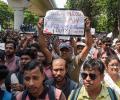
The Supreme Court has extended the services of terminated teachers in West Bengal who were found untainted by the CBI, providing relief to the state. The court did not, however, extend the services of grade 'C' and 'D' employees of state-run and aided schools. The court directed the state government to start the recruitment process by May 31 and conclude it by December 31.

Two petitions have been filed in the Supreme Court seeking a court-monitored probe into the violence in West Bengal over the newly-enacted Waqf (Amendment) Act. The petitions call for a special investigation team or a judicial enquiry commission to investigate the incidents, which have resulted in deaths and displacement. The Calcutta High Court has already ordered the deployment of central forces in the violence-hit Murshidabad district.
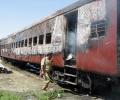
The Supreme Court on Thursday said it will hear on January 15 the appeals filed by the Gujarat government and several other convicts in the 2002 Godhra train burning case.
A bench of Justices Abhay S Oka and Ujjal Bhuyan said when an accused appears before a court in pursuance of a summons, the agency will have to apply to the court concerned to get his custody.

'It was a disaster on his part to give an oral remark which allowed ascertainment of the religious character of places of worship.' 'This disrupted the social harmony of the country.'
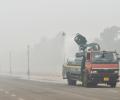
On November 18, the apex court directed all Delhi-NCR states to immediately set up teams to strictly enforce anti-pollution GRAP 4 restrictions, making it clear that the curbs would continue till further orders.
Three judges, including two high court chief justices, were appointed to the Supreme Court on Thursday.
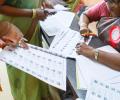
The Supreme Court has agreed to hear petitions challenging the Election Commission's decision to revise electoral rolls in Bihar. The hearing is scheduled for July 10.

The Supreme Court has directed the Election Commission to provide details regarding the 3.66 lakh voters excluded from Bihar's final electoral roll after a Special Intensive Revision (SIR) exercise. The court's direction came after concerns were raised by petitioners about the lack of notice or reasons given to the excluded voters.
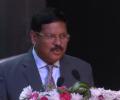
Chief Justice of India Sanjiv Khanna has recommended Justice Bhushan Ramkrishna Gavai as the next CJI. Justice Gavai, the second most senior Supreme Court judge, will become the 52nd CJI on May 14, 2024, after CJI Khanna's retirement on May 13. Justice Gavai has served on several important Constitution benches and has been a part of landmark verdicts, including the one upholding the Centre's decision to abrogate provisions of Article 370.
The Supreme Court questioned Justice Yashwant Varma's conduct regarding an in-house inquiry panel report that found him guilty of misconduct in a cash discovery row. The court raised concerns about his delayed challenge to the inquiry and the implications of the panel's recommendations.
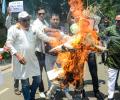
The Madhya Pradesh high court on Thursday expressed dissatisfaction with the first information report (FIR) registered by police on its orders against minister Vijay Shah regarding his objectionable remarks about Colonel Sofiya Qureshi, and said it must be comprehensive.
The Supreme Court on Tuesday dismissed the argument that a three-judge bench, rather than a two-judge bench, should hear appeals of convicts in the 2002 Godhra train burning case. The court found that the Gujarat High Court commuted the death penalty to life imprisonment, therefore not requiring a three-judge bench. The hearing of the appeals will continue on Wednesday, with the state government seeking restoration of the death sentences of 11 convicts.

The Supreme Court of India is set to determine whether Rohingya individuals in the country are to be considered refugees or illegal entrants, a crucial decision that will impact their rights and potential deportation.

The BJP lawmaker sparked a row when he said, "(the) Supreme Court is taking the country towards anarchy" and that "Chief Justice of India Sanjiv Khanna is responsible for the civil wars taking place in the country".
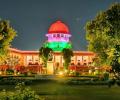
The Centre told the Supreme Court that governors are not indefinitely sitting on bills passed by state legislatures, and that barring a few exceptions, most have acted in a way which the apex court would have perhaps desired. Solicitor General Tushar Mehta argued that a Governor is "not a rubber stamp" and has a duty to preserve, protect, and defend the Constitution.

The Supreme Court on Friday upheld JSW Steel's Rs 19,700-crore resolution plan for debt-ridden Bhushan Power and Steel Limited (BPSL), bringing down curtains to a prolonged legal battle that spanned nearly eight years.
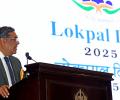
The Supreme Court of India will examine the jurisdiction of the Lokpal, India's anti-corruption ombudsman, in entertaining complaints against sitting high court judges. The court is considering a suo motu proceeding initiated over the Lokpal's January 27 order on the issue. The case involves two complaints filed against a sitting additional judge of a high court, alleging that he influenced a judge of the subordinate judiciary and a judge of the same high court set to deal with a suit filed against the complainant by a private company.
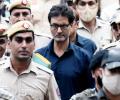
Even Ajmal Kasab was given a fair trial in our country, the Supreme Court on Thursday remarked and indicated it may set up a courtroom inside Tihar Jail for the trial of J-K separatist leader Yasin Malik in a kidnapping case.
The Supreme Court is reviewing objections to the movie 'Udaipur Files - Kanhaiya Lal Tailor Murder,' with the Centre suggesting six cuts. The court has extended a stay on the film's release until further orders.
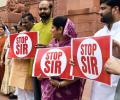
The Supreme Court has warned that it will set aside the special intensive revision (SIR) of electoral rolls in Bihar if any illegality is found. The court is reviewing the validity of the Bihar SIR and its potential impact on a similar exercise across India.

The Supreme Court of India has dismissed a plea filed by the legal heir of former Tamil Nadu chief minister J Jayalalithaa seeking the return of properties confiscated in a corruption case against her. The court stated that the abatement of proceedings due to her death did not mean she was acquitted of the crime. The court upheld the confiscation of her properties, including her iconic residence, Veda Nilayam, land parcels, estates, bank deposits, and other assets, which will be transferred to the Tamil Nadu government.

The Lok Janshakti Party (Ram Vilas) president, who is on a tour of his home state Bihar, was replying to questions from journalists who sought his views about the episode.

55 road accidents, 20 deaths every hour.
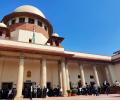
A five-judge constitution bench of Justices SK Kaul, Sanjiv Khanna, A S Oka, Vikram Nath and J K Maheshwari had reserved its judgement on September 29, 2022.

Arvind Kejriwal's wife Sunita congratulated the Aam Aadmi Party and wished for the release of other leaders lodged in Tihar jail.

The Supreme Court has ordered the removal of all stray dogs from Delhi-NCR streets following concerns about rabies and dog bite incidents, particularly those involving children. The court criticized animal lovers and activists, questioning their ability to compensate for the loss of life due to rabies.
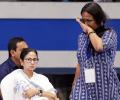
West Bengal Chief Minister Mamata Banerjee on Monday pledged to protect the rights of 'eligible candidates' who lost their jobs after a recent Supreme Court verdict, evoking mixed responses from the affected teachers, thousands of whom turned up to hear the leader speak but remained dangling between hope and despair after she finished.
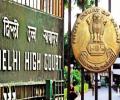
The Supreme Court collegium has initiated an initial inquiry against Delhi High Court judge Justice Yashwant Varma following the alleged discovery of a large stash of cash at his official residence during a fire incident. The collegium has also reportedly recommended Justice Varma's transfer to his parent high court, the Allahabad High Court. The inquiry will involve seeking a report from the Chief Justice of the Delhi High Court on the incident. The controversy surrounding the alleged discovery of cash was first reported by The Times of India. Justice Varma's proposed transfer is subject to the Centre's approval. The amount of cash found is not yet known. Justice Varma, currently heading a division bench dealing with sales tax, GST, company appeals and other appeals, did not hold court on Friday. Delhi High Court Chief Justice D K Upadhyaya expressed shock over the incident. The collegium reportedly received information about the cash discovery from government officials. Some collegium members have called for stricter action against Justice Varma, including seeking his resignation or launching an in-house inquiry. The Supreme Court has an in-house inquiry mechanism to deal with allegations against judges, which involves forming a committee to investigate and, based on the report, take further action. A judge of a constitutional court can only be removed through impeachment by Parliament.

Jailed activist Sonam Wangchuk has appealed to the people of Ladakh to maintain peace and unity and continue with the ongoing struggle for statehood and safeguards under the Sixth Schedule of the Constitution in the true Gandhian way of non-violence, his lawyer said on Sunday.

The FIR, filed in December 2022 by M G Nagaraja, alleged that the 24-year-old Paris Olympian, along with his brother Chirag Sen, had fudged their age to get into playing age-group tournaments since 2010.
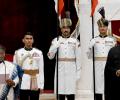
Justice Bhushan Ramkrishna Gavai was on Wednesday sworn in as the 52nd Chief Justice of India.

The Supreme Court of India dismissed a plea seeking the inclusion of Vinayak Damodar Savarkar's name in the Emblems and Names (Prevention of Improper Use) Act, 1950. The petitioner, appearing in person, argued for the inclusion based on his 30 years of research and claimed a need to establish facts about Savarkar in a legally verifiable manner. However, the court found no violation of fundamental rights and suggested the petitioner make a representation to the Union of India for curriculum inclusion. This dismissal follows the court's earlier reprimand of Congress leader Rahul Gandhi for his remarks on Savarkar at a rally in Maharashtra, although criminal proceedings against Gandhi were stayed.
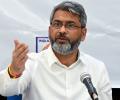
Individuals will come and go but they cannot control a sport in the country, All India Football Federation (AIFF) President Kalyan Chaubey said on Thursday as he also mentioned a court judgment.

'Life in India is better only for those who have reservations.'

A 52-year-old government school teacher from Indore, who is suffering from an excruciating bone disorder that has confined her to a wheelchair, has sought President Droupadi Murmu's permission to undergo euthanasia.

The Supreme Court has allowed podcaster Ranveer Allahbadia to travel abroad after the Assam and Maharashtra governments said the investigation against him was complete. Allahbadia, known as BeerBiceps, was booked for his comments on parents and sex on comic Samay Raina's YouTube show "India's Got Latent".
The Supreme Court of India has scheduled a hearing on February 19 for pleas challenging the appointment of the Chief Election Commissioner and Election Commissioners under the 2023 law. The court emphasized the potential consequences if any action is taken before the hearing. The pleas argue that the 2023 law, which excludes the Chief Justice of India from the selection panel, undermines the independence of the Election Commission and allows for undue influence from the executive branch. The court's earlier verdict in March 2023 called for an independent selection panel comprising the Prime Minister, Leader of the Opposition, and the Chief Justice of India to ensure the integrity of the Election Commission. The case highlights concerns about the independence of India's electoral process and the potential for political influence in the appointment of key election officials.
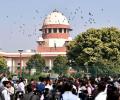
"The prejudice against Urdu stems from the misconception that Urdu is alien to India. This opinion, we are afraid, is incorrect as Urdu, like Marathi and Hindi, is an Indo-Aryan language. It is a language which was born in this land," the judges said.
The Supreme Court has questioned the central government about the possibility of constructing a border wall to prevent illegal immigration, drawing parallels with the US border policy. The court also addressed concerns about the detention and deportation of Bengali-speaking migrant workers.
